How to Get Off a Chairlift on a Snowboard: The No-Fall Guide
Quick Answer
The secret to exiting a chairlift is weight distribution and traction. As the chair hits the ramp, turn your body sideways (aligned with the board), place your back foot firmly against the rear binding, and stand up. Let the chair push you forward.
The "Safe Exit" Checklist:
- Clear the Highback: Ensure your rear binding's highback is folded down so you don't sit on it.
- Nose Straight: Point your board straight ahead, not at the skier next to you.
- Foot Placement: Jam your back foot against the rear binding (ideally onto a traction pad).
- Shoulders Aligned: Turn your shoulders to match the board direction.
- Don't Lean Back: This is the #1 cause of falls. Lean slightly forward.
Table of Contents
The "Lift Anxiety" Factor
For many riders, the riding isn't the scary part. It's the last 10 seconds of the chairlift ride. You are one-footed, sliding on ice, surrounded by skiers who don't know where their poles are.
If you constantly feel like your board is "running away" from you as soon as you touch the snow, it is rarely a skill issue. It is usually a friction issue.
The Gear Check: Why You Are Slipping
Before we talk about technique, look at your setup. Snowboards have glossy, slippery topsheets to shed snow. Your snowboard boot has a rubber sole.
When you put wet rubber on glossy plastic, it creates a hydroplane effect. You have zero control.
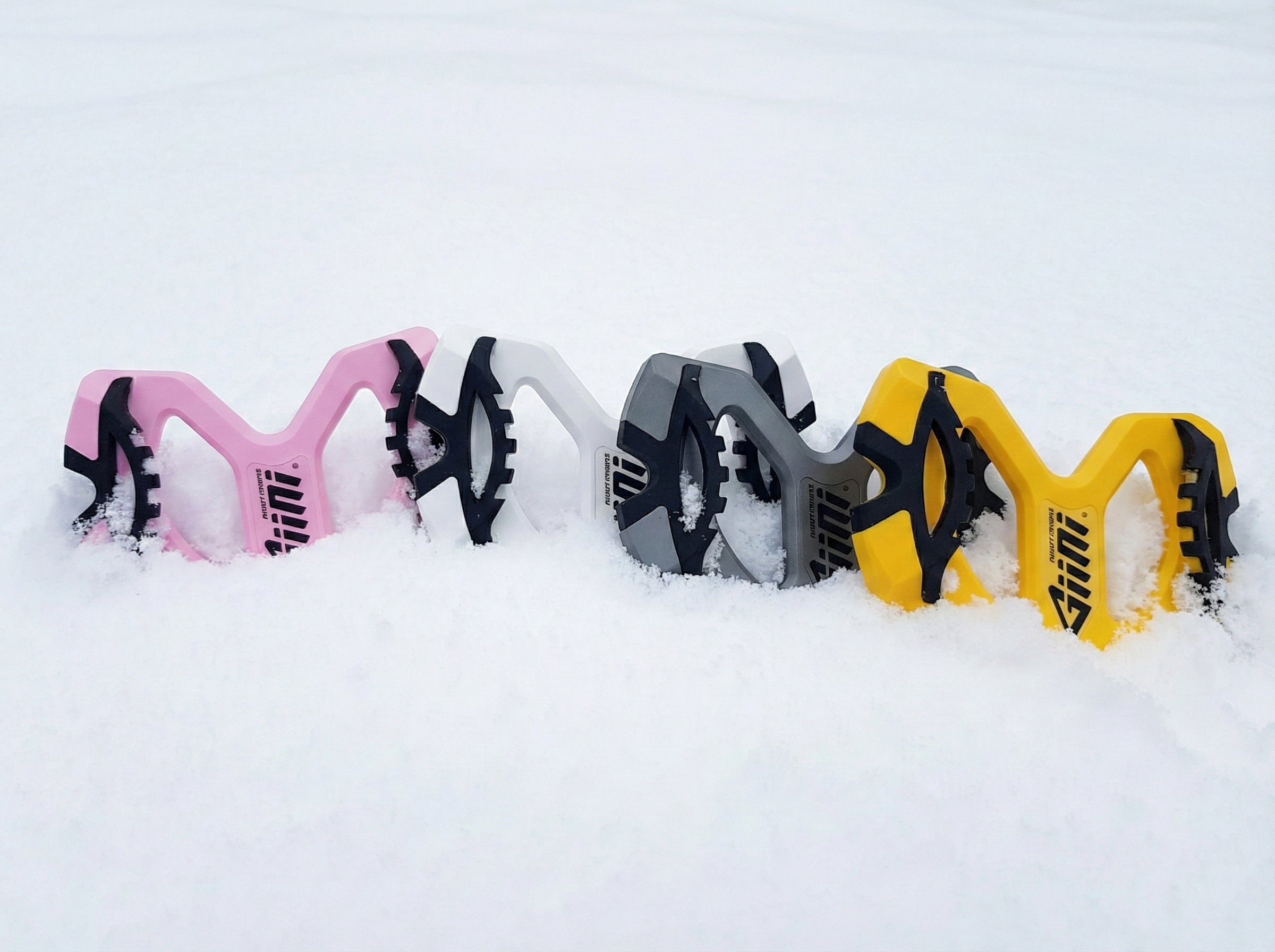
The Fix: You need a mechanical lock for your unbound foot. This is why we engineered the Giini Pyro. Unlike foam stickers that ice over, hardware ridges allow your boot to "cog" into the board, giving you the same steering control as if you were strapped in.

Step-by-Step Exit Strategy
Follow this routine every time, and you will stop falling.
1. The Approach (30 Feet Out)
Scoot your hips forward to the edge of the seat. Rotate your board so the nose is pointing straight forward.
Tip: Look at the exit ramp. Is it icy? slushy? bumps? Plan your line.
2. The Touchdown (Contact Point)
As the board touches the snow, place your free foot onto your stomp pad. Press it firmly against the inside of your rear binding. This gives you a reference point so you don't look down.
3. The Stand
When the flat part of your board is on the snow, stand up. Do not push off. Just stand and let the moving chair nudge the back of your legs to propel you forward.
4. The Glide
Once you are moving, shift your weight slightly to your front foot. Keep your knees bent. If you need to turn away from the chair, apply pressure to your toe or heel edge using your back foot (this is where the grip is crucial).
3 Mistakes That Cause Pile-Ups
1. Leaning Back (The "Banana Peel")
Instinct tells you to lean away from the slope. Don't. If you lean back, your weight goes over the tail, you lose steering, and the board shoots out like a banana peel.
2. Looking at Your Feet
Your body goes where your eyes go. If you look at your boots, you will tip over. Look at the "Unload Here" sign or a tree in the distance.
3. Hesitation
If you stay seated too long, the ramp drops away, and you have to jump. Commit to standing up as soon as the board is flat on the snow.
Troubleshooting Your Exit
| Problem | The Cause | The Fix |
|---|---|---|
| Board slides sideways | Back foot slipping on topsheet | Install Rigid Traction Hardware |
| Falling backward | Weight too far back | Press shins into boot tongues |
| Colliding with neighbor | Not looking ahead | Pick a spot in distance & stare at it |
Frequently Asked Questions
Should I hold onto the chair when getting off?
You can use one hand to gently push off the armrest for stability, but let go as soon as you are standing. Holding on too long will swing you around and cause a crash.
I'm Goofy, and the lift merges left. What do I do?
This is tricky. You have to ride on your toe edge (back to the chair) or heel edge (facing the chair) depending on the merge. Having a secure stomp pad allows you to engage that edge firmly without slipping.
Do I really need a stomp pad?
Technically no, but practically yes. It's like driving a car with bald tires. You can do it, but it's dangerous. Read our guide on why riders are switching to hardware.
How do I stop once I'm off?
Drag the toe or heel of your free boot in the snow to act as a brake, or turn the board uphill gently to bleed off speed.
Confidence starts with grip.
Stop the slip. Lock your boot in with the Giini Pyro.
Upgrade Your Setup