The best all-mountain snowboard boots of 2026
Your boots are the first link in the control chain. If they fail, nothing downstream matters.
The quick answer: The best all-mountain snowboard boots for 2026 are the K2 Maysis for industry-leading heel hold, the Burton Ion BOA for high-speed precision, and the Ride Lasso Pro for long-term durability. For all-mountain riding, look for a medium-to-stiff flex (6–8/10) and a dual-zone lacing system that lets you tune the upper and lower independently.
Why your boots matter more than your board
If your feet aren't happy, your season is over. That's not an exaggeration. It's physics.
Riders obsess over rocker profiles and sidecut radii, but your boots are the primary interface for energy transfer. Every toe-side carve starts in your toes. Every heel-side check starts in your heel. Every subtle weight shift passes through your boot before it reaches the binding, the board, or the snow.
A boot that's too soft washes out at speed: your ankle flexes past the point of control before the edge engages. A boot that's too stiff turns a full day into a punishment. The right boot does something quietly powerful: it disappears. You stop thinking about your feet and start thinking about your line.
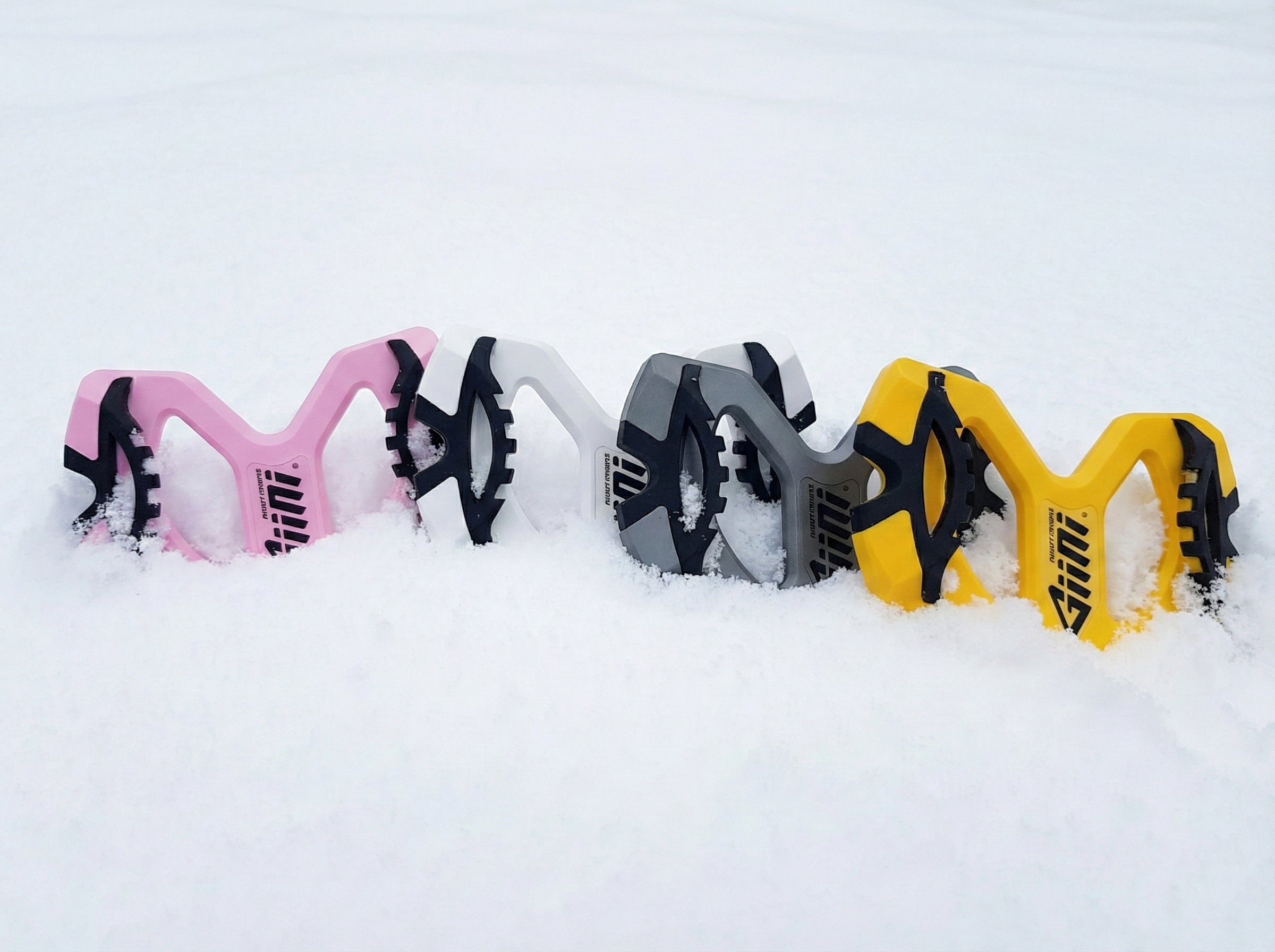
The control chain: Your boots transfer energy into your bindings. Your bindings transfer it into the board. And when you unstrap, your boot's sidewall becomes the contact point for your Giini Pyro: the rubber bumpers grip the boot's rubber sole and sidewall to lock you in. A well-fitting boot with a clean, rigid sidewall gives the Pyro more to grab. Worn-out, packed-out boots reduce grip everywhere: in your binding and on your hardware.
Quick comparison: top all-mountain boots of 2026
| Model | Flex (1–10) | Lacing | Best For |
|---|---|---|---|
| K2 Maysis | 7 (Mid/Stiff) | Double BOA | Heel hold and versatility |
| Burton Ion BOA | 8 (Stiff) | Dual BOA | Technical charging |
| Ride Lasso Pro | 8 (Stiff) | BOA / Tongue Tied | Longevity and response |
| Vans Infuse | 5–9 (Tunable) | Hybrid Lace/BOA | Customizable flex |
The reviews
1. K2 Maysis: The all-mountain MVP
The K2 Maysis has earned its reputation by solving the number one complaint in snowboarding: heel lift. The Conda BOA system uses an internal urethane chip that hugs your ankle, locking your heel down without over-tightening the outer shell. You get precision where it matters (the heel) without crushing the rest of your foot.
How it rides: The flex lands at a 7: stiff enough to drive through a chundery traverse, but with enough lateral give for an occasional park lap. The Intuition Control Foam 3D liner is heat-moldable, meaning you can bake it to a custom fit before your first day. No break-in period. No hot spots.
2. Burton Ion BOA: Precision and power
If you live for high-speed carves and technical terrain, the Burton Ion is the boot to beat. It's legendary for its dampening and its Life Liner, a liner designed to maintain its flex and shape for multiple seasons without packing out. Most liners soften by mid-season. The Ion's stays firm.
How it rides: At an 8/10 flex, the Ion offers immediate response. You think about an edge change, and it's already started. The EST-optimized midsole lowers your center of gravity, improving board feel and reducing the "standing on a platform" sensation that plagues thicker-soled boots.
3. Ride Lasso Pro: The durability king
Ride's In2grated construction produces some of the shortest, lightest boots on the market, which directly reduces toe and heel drag on deep carves. The Lasso Pro is the beefed-up version of their classic Lasso, built for riders who push their gear to the limit and need it to survive.
How it rides: The Michelin Summit Sole provides mountain-goat levels of traction on icy bootpacks and hike-to terrain. The flex is stiff but predictable: no dead spots, no surprises. The "Tongue Tied" BOA system takes a few days to dial in, but once you find your tension, it locks.
Technical breakdown: how to choose your setup
Understanding boot flex ratings
Most brands use a 1–10 scale. For all-mountain riding, stay between 6 and 8. A soft flex (1–4) is great for jibs and park laps but will wash out at high speeds. Your ankle bends past the point where the edge engages, and you lose control. A stiff flex (9–10) is designed for professional-level freeriding and can be exhausting on an average resort day. The 6–8 range gives you enough stiffness to hold an edge at speed and enough forgiveness to ride all day.
Heat-moldable liners: the 20-minute upgrade
Modern liners use EVA foam that reacts to heat. The process is simple: heat the liner in an oven (your shop will do this), put the boot on, and stand in a riding stance until it cools. The foam maps to your foot, eliminating pressure points and hot spots before you touch snow. If your boots have heat-moldable liners and you haven't baked them, you're riding a generic fit instead of a custom one.
BOA vs. traditional lacing
Double BOA offers the most convenience: tighten the upper and lower zones independently with a dial. Fast, precise, adjustable with gloves on. Traditional lacing gives you the most granular "zonal" control and a more natural flex feel, but requires bare hands and patience. Hybrid systems (lace-up front, BOA-driven internal harness) aim for the best of both. For most all-mountain riders, dual-zone BOA is the right call.
Boot condition and your Pyro: The Giini Pyro's rubber bumpers grip the sidewall of your boot sole. A boot with a clean, firm sidewall gives the Pyro a solid contact surface. Once your boot packs out and the sole starts deforming, you'll feel it everywhere: less response in your bindings, less grip on your hardware, less control on every lift exit. If you're over-tightening your laces just to get response, it's time for new boots.
Frequently asked questions
Is a stiffer boot better for beginners?
No. Beginners should look for a soft-to-medium flex (3–5/10). Stiff boots are less forgiving and make learning turn initiation harder. As you progress to higher speeds and steeper terrain, move toward a stiffer all-mountain boot.
How should snowboard boots fit?
Standing straight, your toes should lightly touch the end of the liner. When you lean forward into a riding stance, your toes should pull back slightly, and your heel should stay locked in place. If your heel lifts when you press onto your toe edge, the boot is too loose. No amount of lacing will fix a fundamentally wrong size.
Do I need to match my boot brand to my binding brand?
Not necessarily. Staying within the same ecosystem (Burton boots with Burton bindings, for example) can improve the interface, but all the boots reviewed here work with all major binding brands. Focus on matching flex ratings over matching logos.
How often should I replace my boots?
The average boot lasts 60 to 100 days of riding. Once the shell softens and you find yourself cranking the laces just to get a response, the boot is packed out. At that point, you're losing energy on every input: into your bindings, onto the board, and onto your Pyro.
One pair of socks or two?
One. Always one. A single pair of merino wool snowboard socks wicks moisture and insulates. Two pairs restrict blood flow, reduce feel, and actually make your feet colder. More layers does not mean more warmth.
Your boots connect you to the board. Your Pyro connects the board to your free foot.
Complete your control chain. From boot to binding to board to hardware.
Shop the Giini Pyro