The best all-mountain snowboard bindings of 2026
Your bindings translate your body into the board. Here's how to choose the ones that translate it best.
The quick answer: The top all-mountain bindings for 2026 are the Union Force for bombproof durability, the Burton Cartel X for aggressive edge response, and the Ride A-8 for precision aluminum feel. For versatility, look for a medium-stiff highback and a canted footbed to reduce joint fatigue across long days.
Why bindings matter more than you think
Riders obsess over boards. They agonize over boots. But bindings? Most people just grab whatever's on sale.
That's a mistake. Your bindings are the mechanical link between your body and your edges. Every toe-side carve, every heel-side check, every subtle weight shift passes through them first. If your bindings are too soft, your board feels sluggish, like steering through mud. Too stiff, and every bump on a groomer chatters straight into your knees.
The difference between good bindings and wrong bindings isn't subtle. It's the difference between floating through a turn and fighting through it.
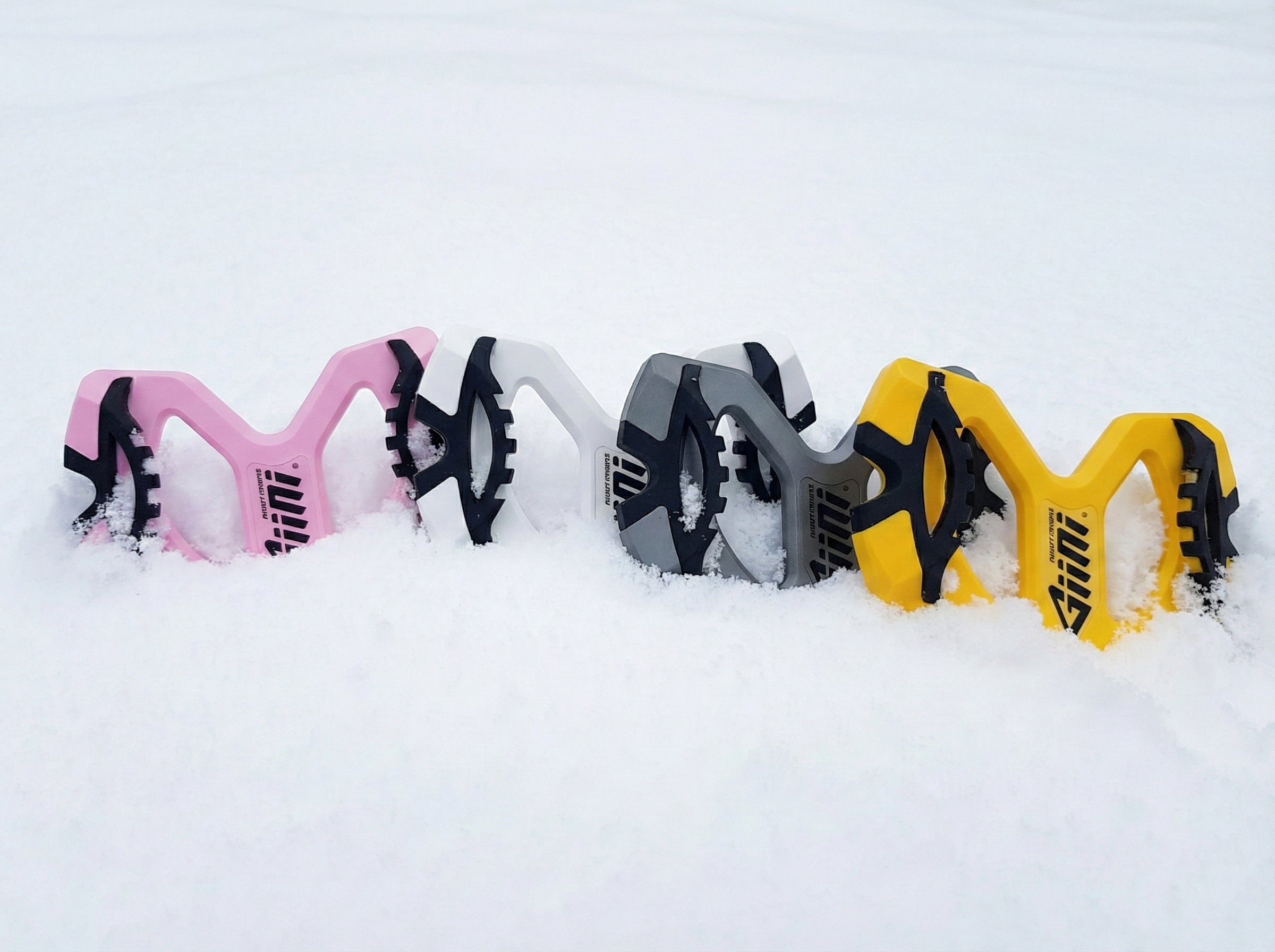
The complete control chain: Your bindings translate your body into the board. Your board translates your inputs into the snow. And when your back foot is unstrapped, a Giini Pyro translates the board back into your free foot. Every link matters.
Quick comparison: 2026 binding leaders
| Model | Flex Rating | Baseplate Material | Mounting |
|---|---|---|---|
| Union Force | 7/10 (Mid-Stiff) | Stage 9 Duraflex ST | Universal (4x4, Channel) |
| Burton Cartel X | 8/10 (Stiff) | Carbon/Nylon Composite | Re:Flex or EST |
| Ride A-8 | 8/10 (Stiff) | Aluminum (A-Series) | Universal |
The reviews
1. Union Force: The workhorse
The Union Force is arguably the most recognizable binding in snowboarding, and for good reason. The 2026 model features the Stage 9 Duraflex ST Baseplate, a material Union has refined for over a decade to deliver lifetime durability without dead weight. It's the binding that works with almost any board and almost any riding style.
How it rides: Consistent. The mid-stiff flex doesn't overpower soft boards or get lost under stiff ones. The Molecular Bushings in the baseplate act as shock absorbers, taking the sting out of flat landings and choppy groomers. You feel the terrain without being punished by it.
2. Burton Cartel X: The edge weapon
The Cartel X is the lighter, more aggressive sibling of the legendary Cartel. The standout feature is the Heel Hammock, a reinforced rubbery material that wraps your boot heel, delivering instant response even when your straps aren't cranked to the max. You think about an edge change, and the Cartel X has already started it.
How it rides: Stiff. Torsionally rigid. This is the binding for riders who want maximum edge authority on icy resort mornings and high-speed groomers. The Dial-FLAD system lets you adjust forward lean instantly: no tools, no stopping.
3. Ride A-8: Aluminum precision
Ride's A-Series uses an aluminum chassis instead of the nylon composites found in most bindings. The difference is immediate: aluminum doesn't flex and slowly return. It snaps back. The A-8 feels reactive and lively underfoot in a way that composite bindings can't replicate.
How it rides: Sharp. Every input transfers directly to the edge with minimal loss. Aggressive riders who want to feel the snow through their feet, not a dampened version of it, will love this binding. The low-profile design keeps your center of gravity close to the board.
Technical breakdown: what actually matters
Baseplate materials: nylon vs. aluminum
Nylon and composite baseplates (Union Force, Burton Cartel X) allow the board to flex naturally underfoot. They dampen vibrations, making rough terrain more forgiving. Aluminum baseplates (Ride A-8) transfer energy more directly: less dampening, more precision. Neither is better; they solve different problems.
Canted footbeds: the fatigue killer
Canted footbeds tilt your feet inward by about 2.5 to 3 degrees. This aligns your ankle, knee, and hip joints into a more natural stance when your feet are spread wide on a snowboard. The result: significantly less knee and hip fatigue on long days, and better leverage over your toe and heel edges. If your bindings offer canting and you aren't using it, you're leaving free performance on the table.
The flex-matching rule
Your binding flex needs to match your boot flex. A stiff binding (8/10) paired with a soft boot (3/10) creates a hinge point at your ankle. The binding overpowers the boot, causing pressure, pain, and sloppy control. As a rule: keep your boot and binding flex within two points of each other.
The hardware check: After your first day of the season, check your binding screws. Riding vibrations can loosen hardware. A quick quarter-turn check takes 30 seconds and prevents a dangerous failure on the mountain. The same principle applies to your Pyro installation: if you followed The Giini Protocol, the bond is locked in. If you rushed it, now is the time to reinstall properly.
Frequently asked questions
Will these bindings fit my board?
Most modern bindings ship with universal disks that fit 4x4, 4x2, and Burton Channel mounting patterns. If you ride a Burton board with the Channel system, EST bindings are designed to maximize that board's flex, but they won't fit on traditional 4x4 decks. Check your board's mounting pattern before buying.
How much forward lean do I need?
Forward lean pushes your calves into an aggressive athletic stance. More lean improves heel-side carving and halfpipe response. Zero lean (flat highback) is preferred by park riders for rail stability and softer landings. Start with moderate lean and adjust based on how your knees feel after a full day.
Are expensive bindings worth it?
For riders logging 20+ days a season, yes. Higher-priced bindings use lighter materials (magnesium buckles instead of steel), better dampening (EVA foam instead of plastic), and more tool-less adjustments. The weight savings alone reduces leg fatigue. If you ride fewer than 10 days, a mid-range binding will serve you well.
Do I need to match my binding brand to my boot brand?
Not necessarily. Staying within the same ecosystem (Burton boots with Burton bindings, for example) can improve fit, but all the bindings reviewed here are compatible with major boot brands. Focus on matching flex ratings over matching logos.
Your bindings are half the equation.
They translate your body into the board. When you unstrap, you need something to translate the board back into your free foot.
Shop the Giini Pyro