Every product can be traced back to one moment. Ours happened at the top of a hill, about four seconds after Andrew Gillespie stepped off a chairlift for the first time.
Andrew grew up on skateboards in the 1970s, back when skateboards were the new thing. And he got good. Not "can roll down the street" good. Handstands-on-a-moving-board good. So when he finally tried snowboarding, at 40, he assumed the balance would carry over.
It did not.
"I wiped out at the top of the hill and it surprised me," he says. "I hit the ground and thought, wow, there's something wrong here. Something needs to be fixed."
The interesting part is what he thought next
Most of us fall at the lift exit and blame ourselves. We laugh it off, scramble clear of the next chair, and quietly decide we are just not there yet. Andrew is an industrial designer and an engineer, so he blamed the equipment instead. Here was someone with decades of board control in his body, and the sport's standard setup still left his back foot standing on a wet, icy sheet of plastic with nothing to hold it.
If balance like his wasn't enough, the problem wasn't balance.
The gap nobody was closing
The market's answer to the lift exit has been the same for decades: stick something textured on the board and hope friction does the rest. Andrew looked at that answer the way an engineer looks at a wobbly bridge. Friction is exactly what ice takes away first, so the fix fails at the moment it is needed most.
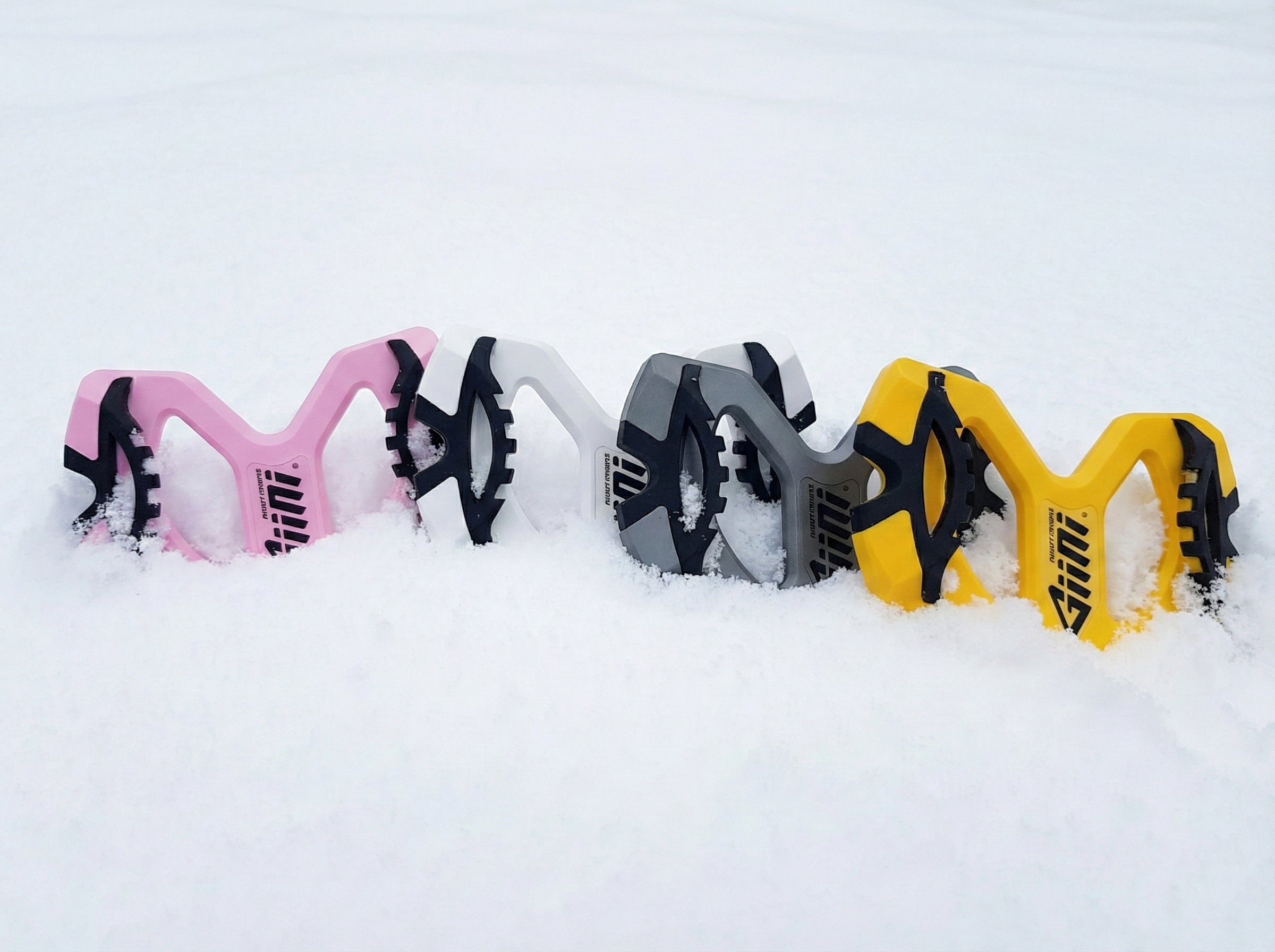
That crash at the top of the hill turned into years of sketchbooks, prototypes and on-hill testing, and eventually into the Giini Pyro: a small, engineered device that grips your boot mechanically so your back foot has real control between the chair and strapping in.
Over the next few weeks we are publishing the whole story here, from the physics of why friction fails to the secrets hiding in our logo. It all starts with a man who thought he had nothing left to learn from a board, and a hill that disagreed.