How to get off a chairlift without falling: Keep your weight centered over your front foot, align your shoulders with the board, and look ahead at a target (not your feet). Allow the board to run flat before gently applying pressure to your toe or heel edge to turn.
The "Anti-Yard Sale" Checklist:
- Shoulders: Parallel to the board (don't face downhill).
- Knees: Bent and athletic (absorb the bumps).
- Hands: Over the nose and tail (not flailing).
- Back Foot: Pressed against the rear binding/traction device.
- Eyes: Up and forward.
Table of Contents
The "Drunk Giraffe" Syndrome
We have all seen it. A rider stands up at the off-ramp, legs wobbling, arms flailing like a windmill, followed by a catastrophic collision with the person in the next seat. This is the "Drunk Giraffe."
It happens because snowboards are designed to be ridden with two feet. When you unstrap one, you lose half your leverage.
For beginners, the top sheet of a snowboard is essentially an ice rink. If you don't have a solid connection between your unstrapped boot and the board, you have zero control. You aren't steering; you're just a passenger on a slippery missile.
The Mechanics of One-Footed Riding
Before you get on the lift, you need to master "skating." This is moving around the flats with one foot unstrapped.
1. The Push
Don't push from in front of the board (common mistake). Push from behind the heel edge. This keeps your center of gravity moving forward.
2. The Glide
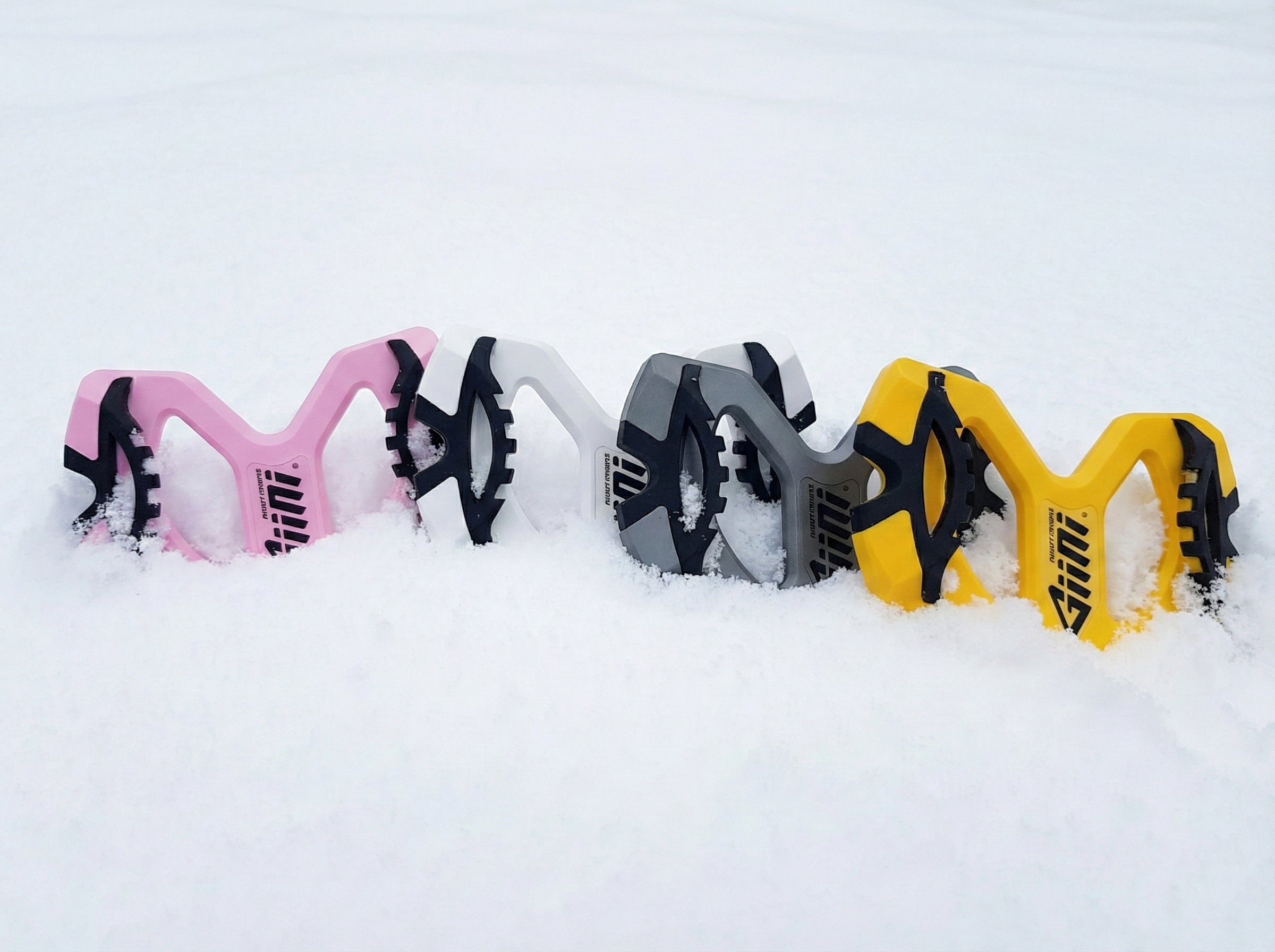
Once you have momentum, place your back foot onto the board. Do not just rest it there. Press it firmly against the inside of your rear binding. If you have a Giini Pyro, you will feel the spring-loaded arms lock your boot in place. This lock is what allows you to steer.
3. The Steer
You cannot steer by twisting your ankle. You steer by leaning your front knee.
- To turn Toe-Side: Push your front knee forward over your toes.
- To turn Heel-Side: Pull your front knee back over your heel.
The Exit Strategy: A Step-by-Step Guide
Step 1: The Approach
As the chair approaches the ramp, scoot your hips forward to the edge of the seat. Rotate your upper body sideways so your board points straight forward.
Step 2: The Touchdown
When the board hits the snow, keep your back foot on the traction pad (between the bindings).
Crucial: Do not sit back down. Stand up decisively.
Step 3: The Departure
Gently push off the chair with your hand to separate yourself from the machinery. Transfer your weight to your front foot.
Mental Cue: Pretend you are squashing a bug with your front foot.
Step 4: The Glide Away
Ride the board flat until you are clear of the ramp. Once clear, apply gentle pressure to your toe or heel edge to turn away from traffic.
Gear Check: Why You Are Slipping
Technique is 80% of the battle. The other 20% is physics.
If your technique is perfect but your back foot slips on the glossy top sheet of your board, you will fall. Most beginners rely on the "factory finish" or a cheap foam stomp pad.
- The Problem: Snow sticks to foam. When you step off the lift, your boot packs snow into the pad, creating an ice layer. You have no grip.
- The Fix: You need a mechanical connection. A device like the Giini Pyro uses active tension to grab the side of your boot, giving you the leverage to steer without slipping.
Comparison: Learning with Friction vs. Hardware
| Feature | Standard Foam Stomp Pad | Giini Pyro (Mechanical) |
|---|---|---|
| Grip Source | Surface friction (texture) | Physical barrier & tension |
| Learning Curve | Harder (Foot slips easily) | Easier (Boot is guided into place) |
| Confidence | Low (Worry about slipping) | High (Locked in feel) |
| Lift Exits | Prone to "penguin shuffle" | Stable and controlled |
Frequently Asked Questions
1. Should I look at my feet when getting off the lift?
No. This is the #1 cause of falls. Your body follows your eyes. If you look down, your weight shifts forward and down, causing you to tip over. Look at a tree or sign at the bottom of the ramp.
2. Which foot should be strapped in?
Your lead foot (front foot) stays strapped in. Regular riders strap the left foot; Goofy riders strap the right. If you don't know, have a friend push you gently from behind. The foot you step forward with is your lead foot.
3. How do I stop without falling?
To stop one-footed, perform a "J-Turn." Apply pressure to your heel edge until the board turns uphill. As the board turns perpendicular to the slope, it will naturally slow down and stop.
4. Can I sit down to strap in immediately off the ramp?
Ideally, no. Most ramps have a "Clearance Zone." If you sit down right at the bottom of the ramp, you become a hazard for the people on the next chair. Glide 20 feet away to the side before sitting down.
5. Do I need a stomp pad as a beginner?
Yes. Beginners struggle with balance, and the top of a snowboard is extremely slippery. A traction device or stomp pad provides the grip needed to keep your back foot stable while skating or exiting a lift.
Ready to Stop The "Yard Sale"?
Don't let the lift line ruin your day. Upgrade your control with the hardware designed to lock you in.
Shop The Giini Pyro Collection